Ise Jingu – Naiku (Kotai Jingu)
Ise Jingu is not a single shrine but a collection of 125 sanctuaries centered around Kotai Jingu (Naiku) and Toyouke Jingu (Geku). Its official name is simply “Jingu.” Naiku is dedicated to Amaterasu Omikami, the Sun Goddess and the supreme deity of the Japanese people. Geku, on the other hand, enshrines Toyouke-no-Omikami, the deity responsible for Amaterasu’s meals and the guardian of basic necessities like food, clothing, and shelter, as well as various industries.
Naiku was established approximately 2,000 years ago along the banks of the Isuzu River. The sacred precinct consists of the Main Sanctuary (Shogu), ten auxiliary shrines (Betsugu), and numerous smaller shrines, creating a vast and spiritual atmosphere.
Uji Bridge and Isuzu River: The Entrance to Ise Jingu Naiku
The Gateway to the Sacred Realm: Crossing the Uji Bridge
The Uji Bridge (Ujibashi), which spans the entrance to the main path of the Inner Shrine (Naiku), is an iconic symbol of Ise Jingu. This bridge serves as a spiritual boundary, separating the everyday world from the sacred grounds. As you cross the 101-meter-long bridge made of Japanese cypress (Hinoki), you can feel your spirit transition into a serene and holy state.
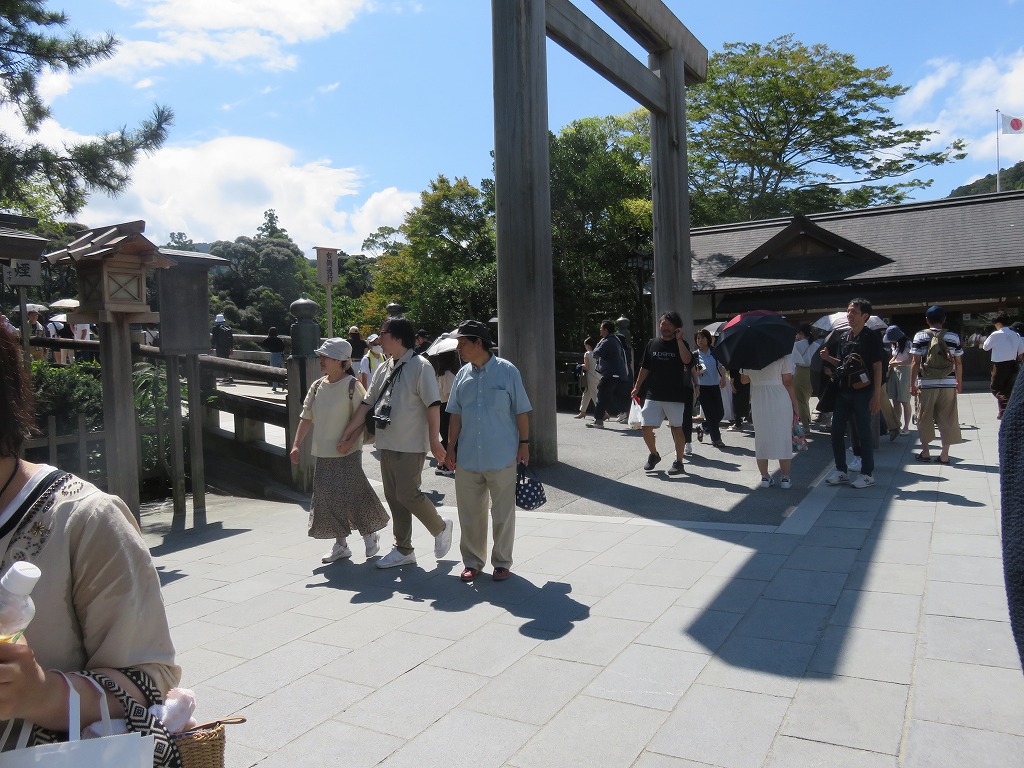
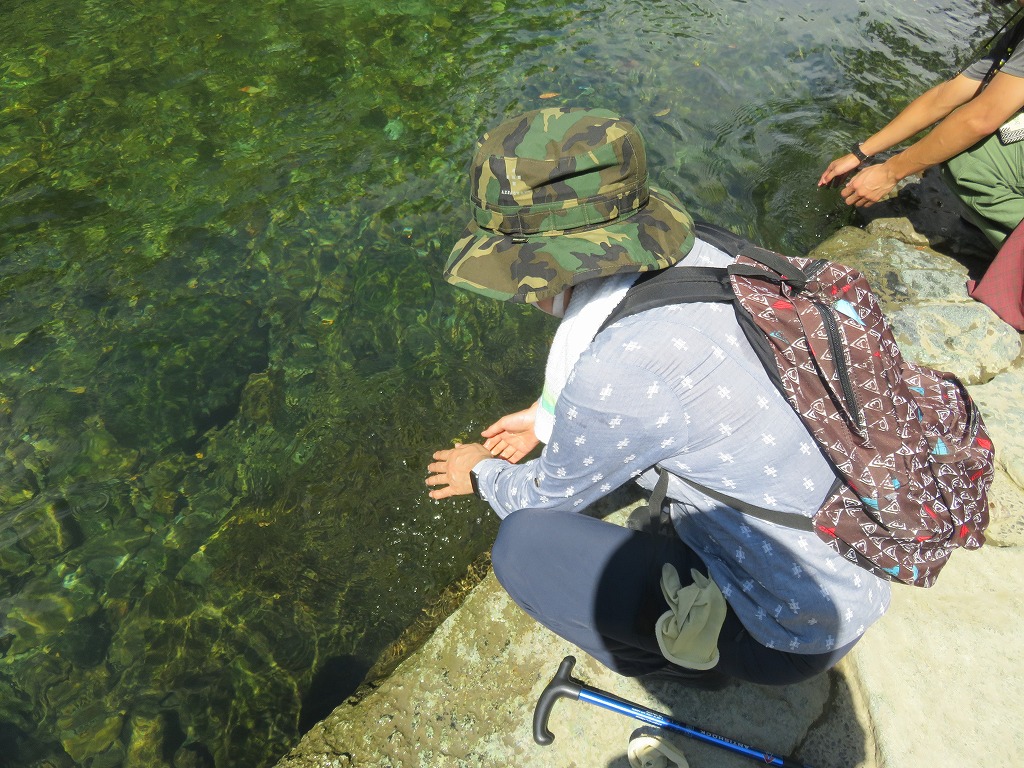
After crossing the bridge, you will find the Isuzu River flowing on your right. Here lies the “Mitarashi” (Riverside Purification Site), where visitors traditionally wash their hands to purify themselves before worship. While there is a modern “Chozuya” (water pavilion) nearby, it is a long-standing custom at Ise Jingu to use the crystal-clear waters of the Isuzu River. The gentle flow and the crisp, clean air naturally calm the minds of all who visit.
How to Perform the Temizu Purification Ritual
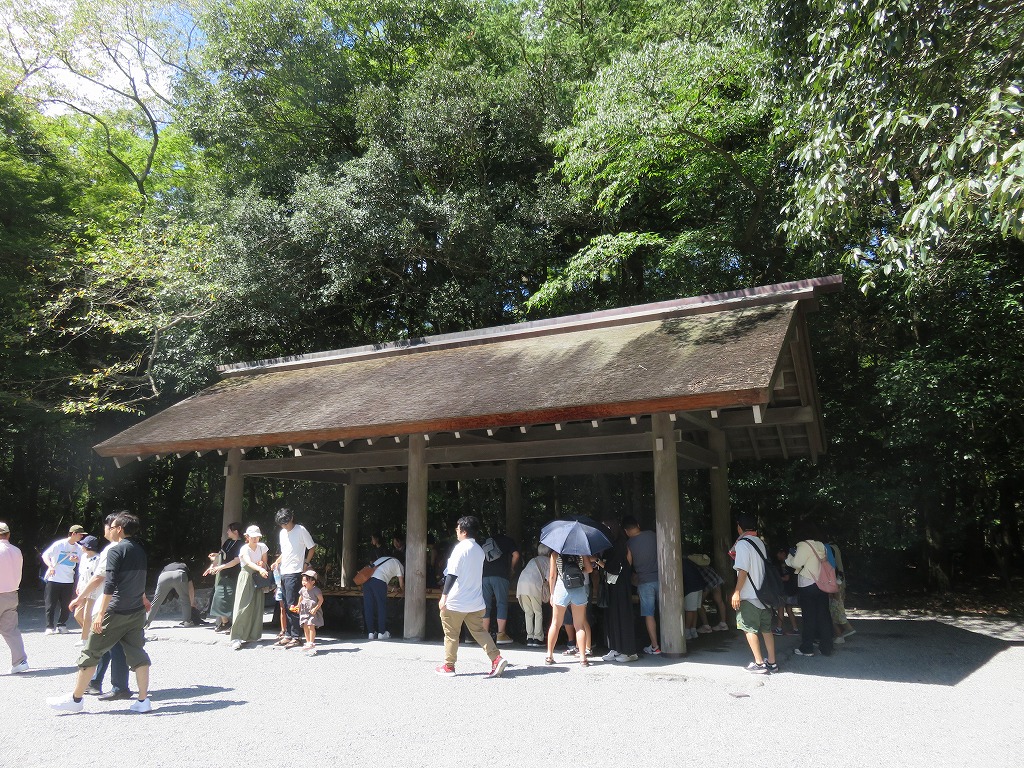
Before approaching the main sanctuary of a shrine, visitors perform a ritual called “Temizu” (or Chozu) at the water pavilion (Chozuya). This act of symbolic purification washes away impurities from your hands and mouth, preparing your heart to meet the deities.
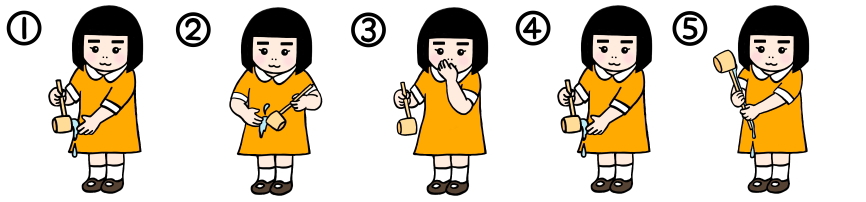
1)Purify your left hand: Hold the ladle (Hishaku) with your right hand, scoop up a generous amount of fresh water, and pour some over your left hand to rinse it.
2)Purify your right hand: Switch the ladle to your left hand and pour water over your right hand to rinse it in the same manner.
3)Rinse your mouth: Hold the ladle with your right hand again. Pour a small amount of water into the palm of your left hand and use it to rinse your mouth. (Important: Do not touch the ladle directly to your mouth.)
4)Rinse your left hand again: Pour a little more water over your left hand, which you used to hold the water for rinsing your mouth.
5)Clean the ladle and finish: Finally, tilt the ladle vertically so the remaining water flows down and rinses the handle (E). Place the ladle back face down in its original position.
The Main Sanctuary of Naiku (Shogu)
The Sacred Shrine Dedicated to Amaterasu Omikami
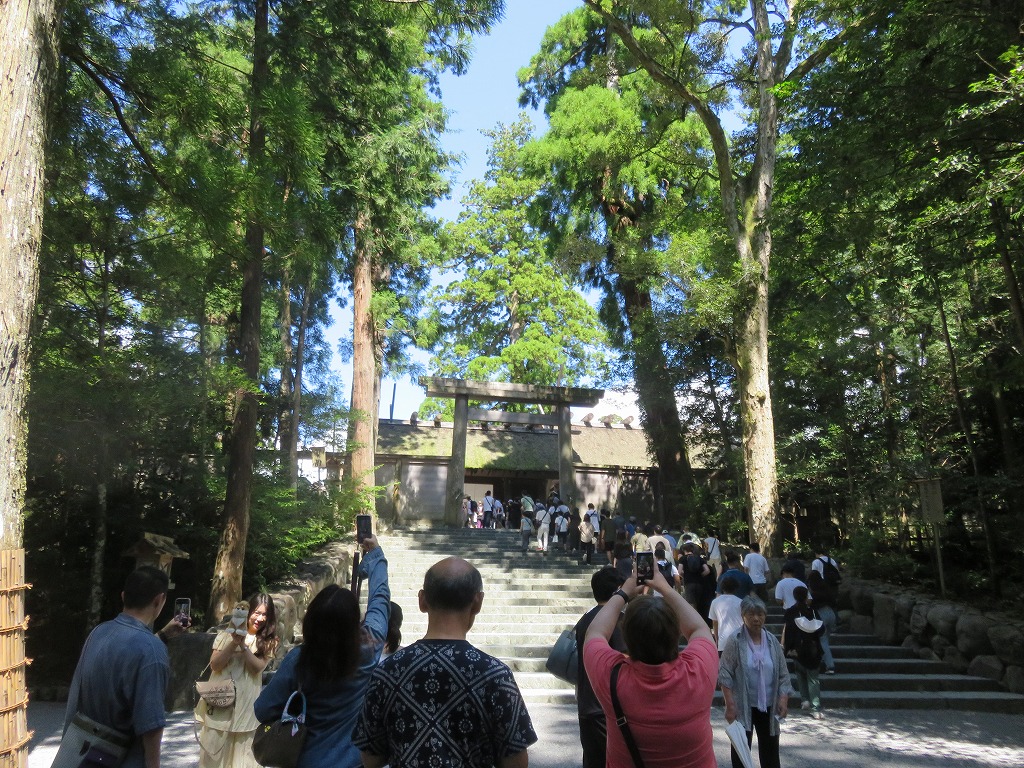
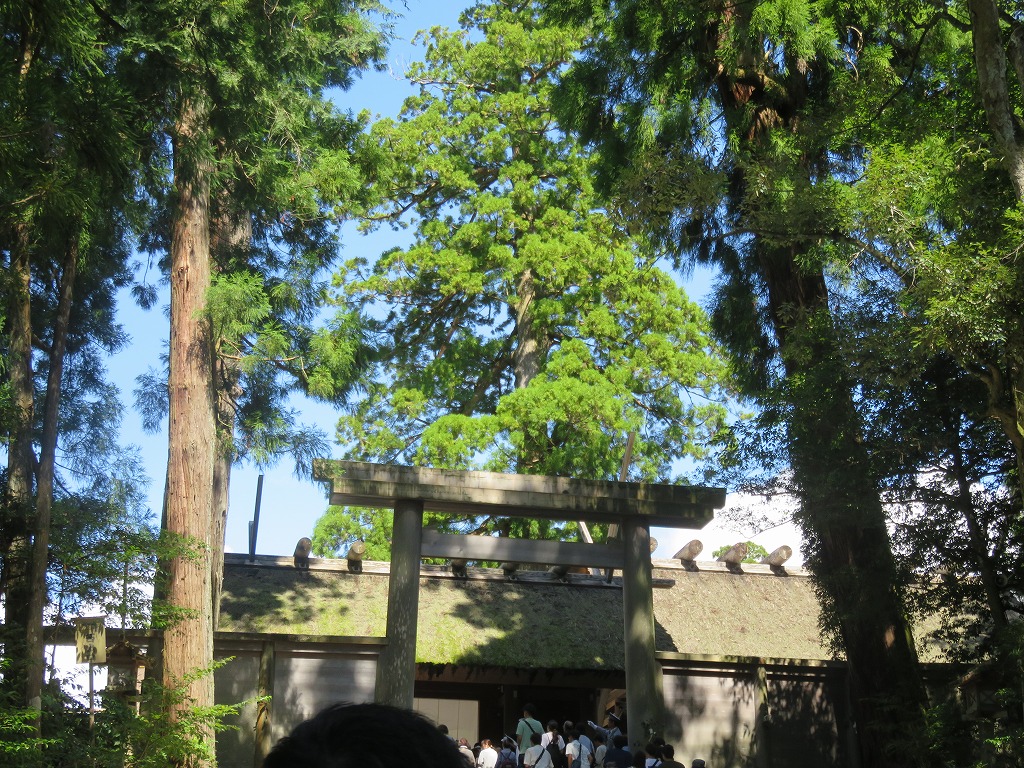
As you walk deeper along the gravel path, you will reach the Shogu, the heart of the Inner Shrine (Naiku). It is built in the “Shinmei-zukuri” style, Japan’s oldest architectural form, characterized by its simple yet powerful beauty and the refreshing scent of Japanese cypress.
According to ancient custom, visitors come here to offer gratitude for daily life rather than praying for personal wishes. Please note that photography is strictly prohibited inside the Main Sanctuary area, except from the bottom of the stone steps.
How to Pray at a Japanese Shrine
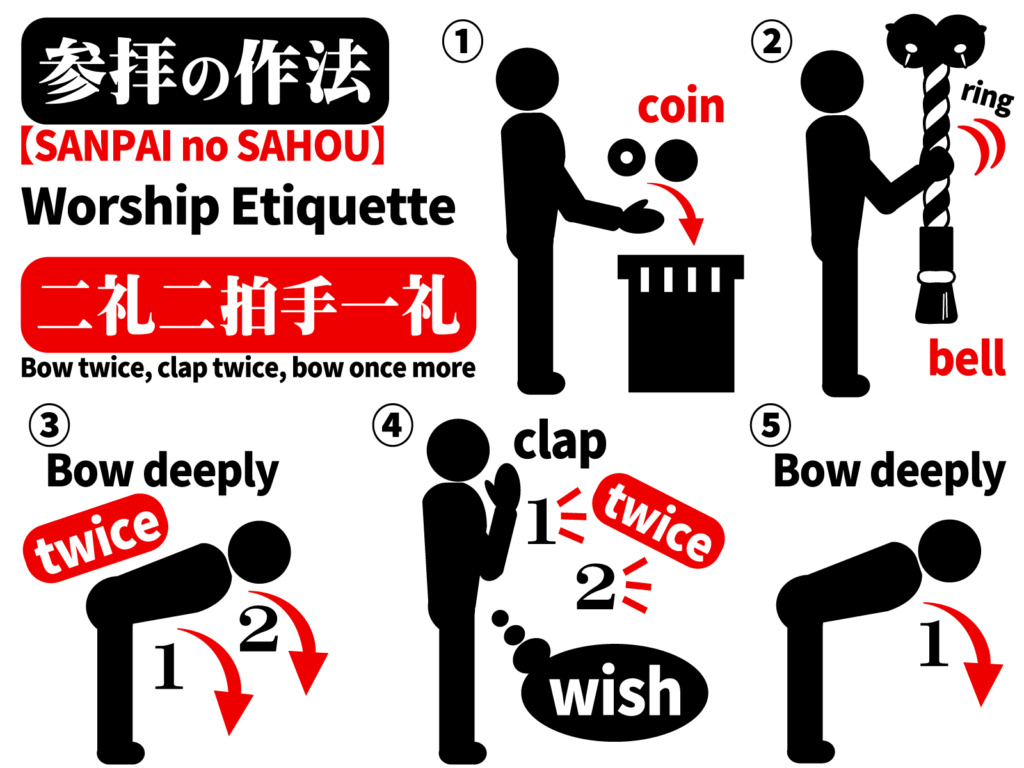
The Ritual of “Two Bows, Two Claps, and One Bow”
Before praying, please calm your mind and follow these traditional steps to show your respect to the deities.
1)Offer a coin: Gently place your offering (Osaisen) into the wooden box. There is no set amount, but a 5-yen coin is often considered lucky.
2)Ring the bell: If there is a bell (Suzu) hanging from a thick rope, ring it once or twice to greet the deity.
3)Bow twice: Show your respect by bowing deeply twice toward the sanctuary.
4)Clap twice: Bring your hands together at chest height. Slightly slide your right fingertips downward, clap your hands twice, and then align your fingertips again to offer your prayer.
5)Bow once more: Finally, offer one last deep bow to conclude your prayer.
Annex Shrines and Special Sites (Betsugu)
Important Sites to Explore within the Inner Shrine Precincts
Aramatsuri-no-miya: The First Auxiliary Shrine
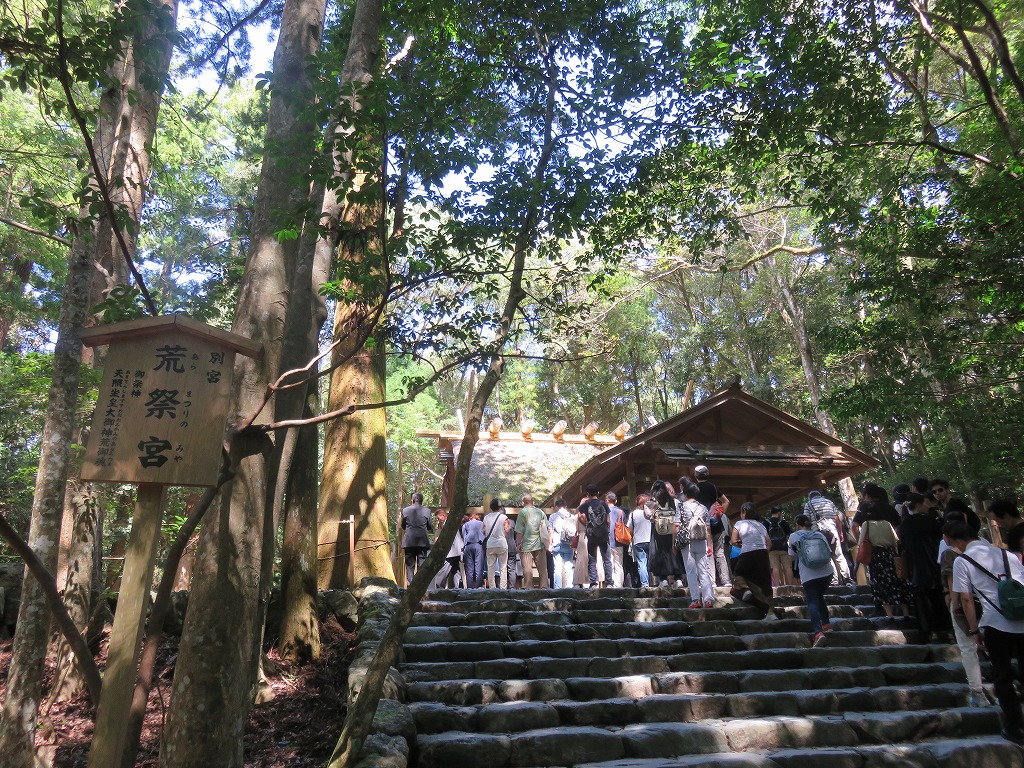
This shrine is dedicated to the “Arimitama” (vigorous spirit) of Amaterasu Omikami. While the Main Sanctuary is for gratitude, this is where it is appropriate to offer personal prayers.
Kazahinomi-no-miya: The Shrine of Wind and Harvest
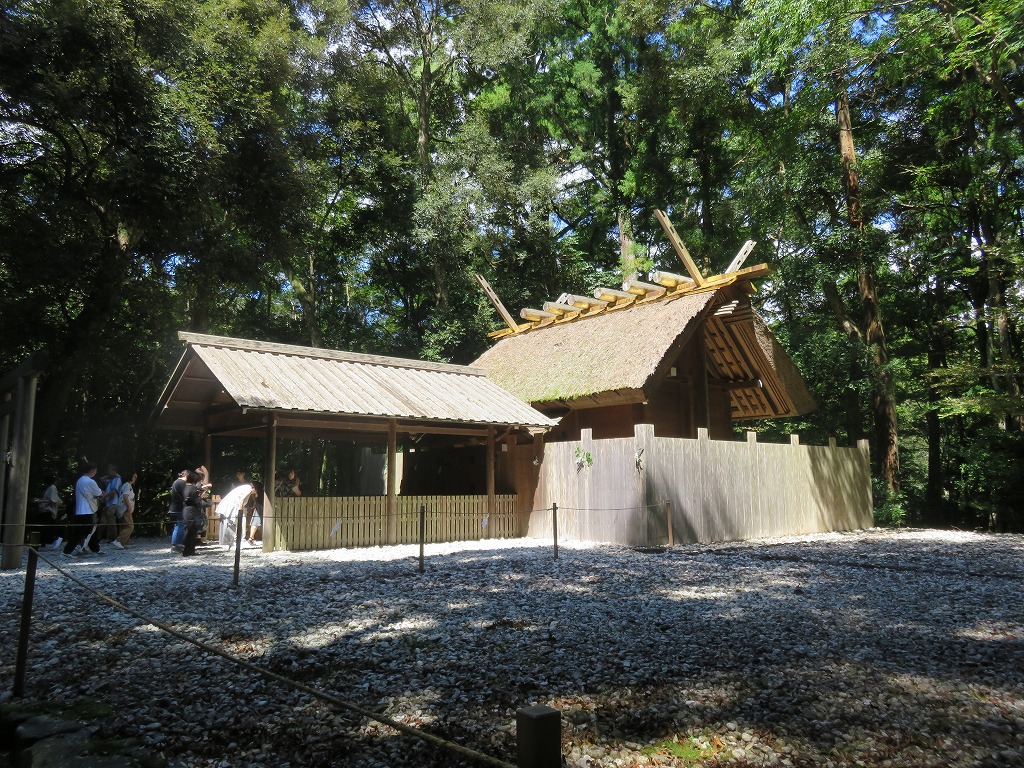
Dedicated to the gods of wind and rain, this shrine famously provided the “Kamikaze” (divine wind) during the Mongol invasions. The surrounding greenery and the bridge make it a beautiful photo spot.
Kaguraden: The Hall for Sacred Music and Dance
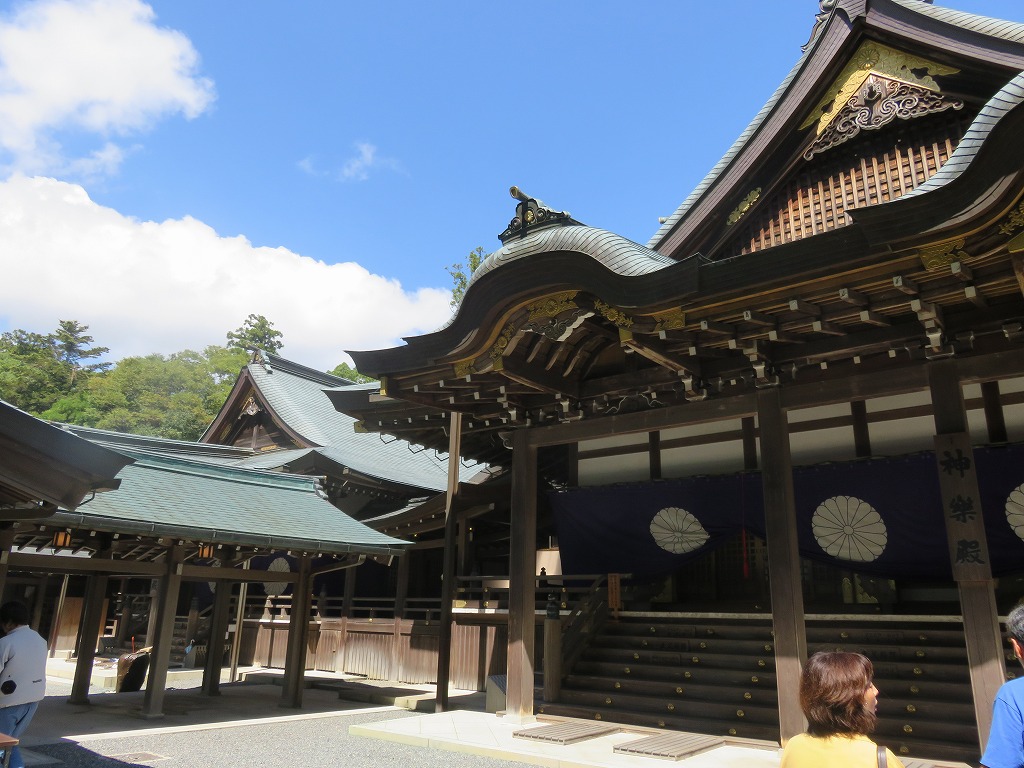
At the Kaguraden, visitors can offer “Okagura” (sacred music and dance) to the deities. This is also where you can apply for “Gokito” (formal prayer services) and receive
Mishine-no-mikura: The Divine Granary
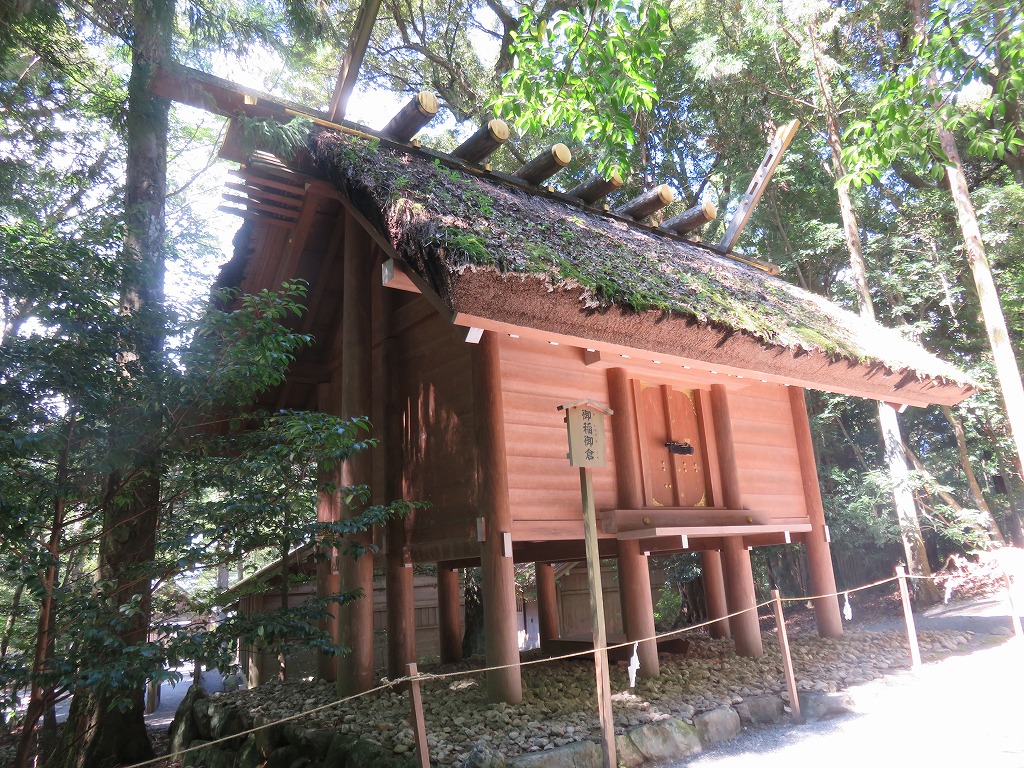
This storehouse keeps the harvested ears of rice from the sacred fields. These grains are offered to the deities as “Omike” (sacred meals) during important festivals.
Amulets and Sacred Charms of Naiku (Juyo-hin)
The sacred talismans of Ise Jingu are called “Ofuda” or “Taima” (meaning a grand offering). After your visit, it is a tradition to take an Ofuda home and place it in your family’s Shinto altar (Kamidana) alongside the charm of your local deity to ensure peace and prosperity.
How to Arrange Sacred Charms on a Shinto Altar
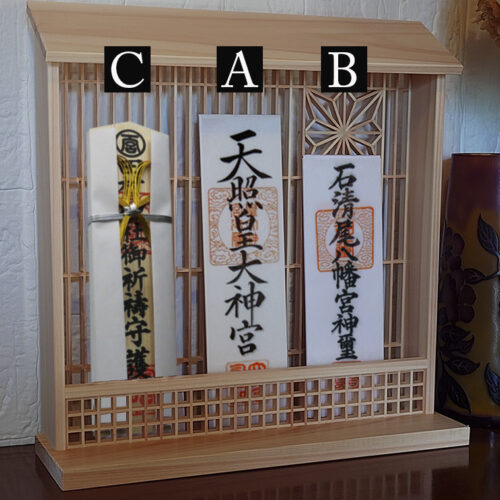
When using a Shinto altar or charm stand that can hold three Ofuda side-by-side, the correct order of placement is as follows:
[A Center] The Ofuda of Ise Jingu
[B Right Side] The Ofuda of your local guardian shrine (Ujigami)
[C Left Side] The Ofuda of a shrine you personally follow
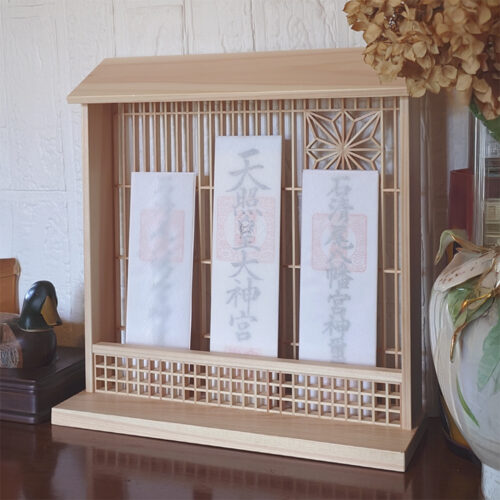
Kamidana made of kumiko -Modern Japanese Home Altar / Minimalist Zen Shrine- >
Okage Yokocho: The Heart of the Inner Shrine Town
A Lively Re-creation of Edo and Meiji Era Streets
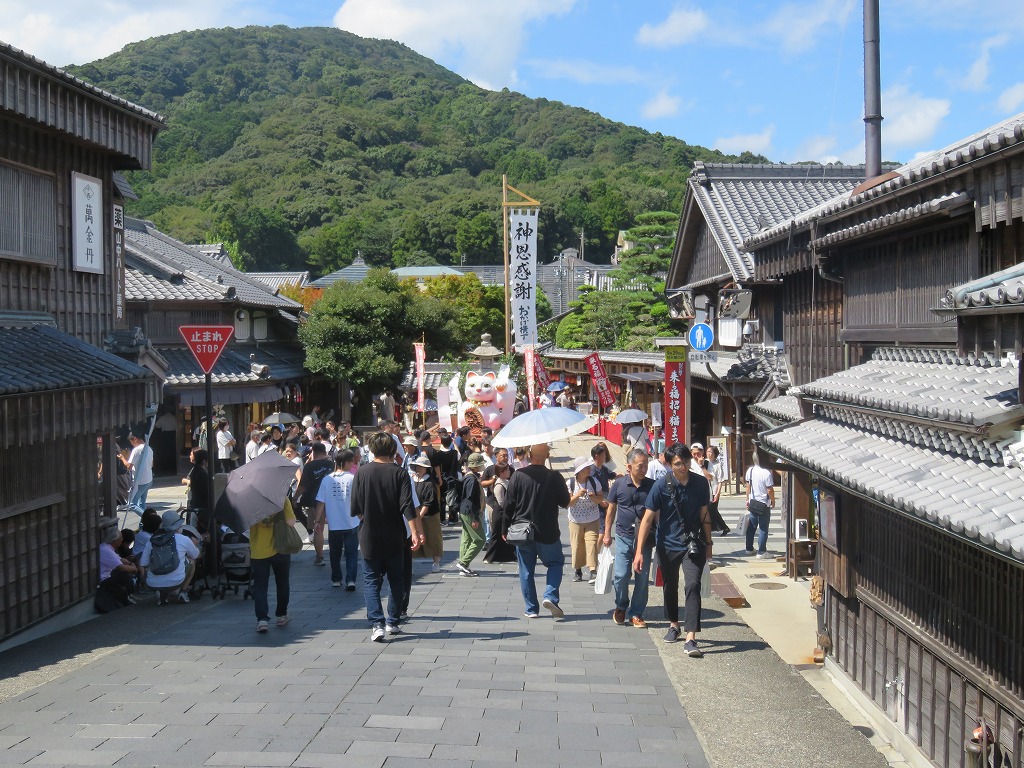
Located in the center of the Naiku pilgrimage town, Okage Yokocho is home to about 50 shops. This area beautifully re-creates the atmosphere of the Edo and Meiji periods (17th–19th centuries), allowing visitors to experience local flavors, history, and customs. You can enjoy iconic specialties like Akafuchi (sweet bean mochi), Ise Udon (thick, soft noodles), and Tekone-zushi (marinated bonito sushi) while soaking in the nostalgic ambiance.
Local Specialties and Fine Dining in Ise City
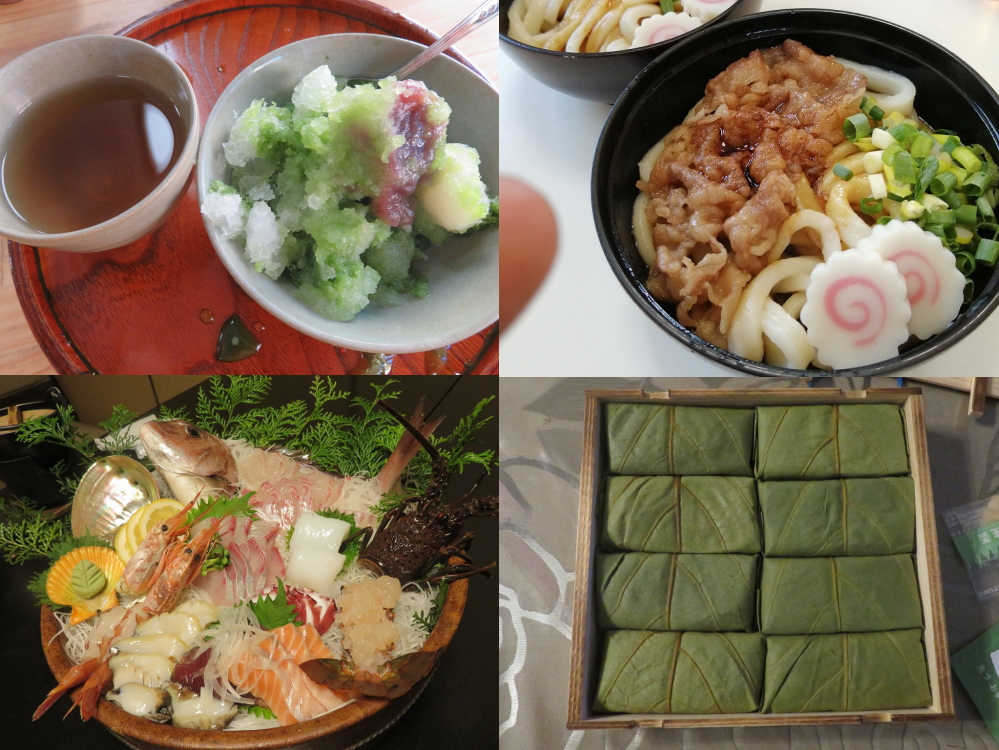
[Top Left] Akafuku-gori (Shaved Ice with Red Bean Paste): A refreshing summer specialty featuring Akafuku’s signature bean paste and mochi hidden inside Matcha-flavored shaved ice.
[Top Right] Ise Udon with Matsusaka Beef: Soft, thick noodles in a savory sauce, topped with world-renowned Matsusaka Beef, one of Japan’s top Wagyu brands.
[Bottom Left] Ise Ebi and Abalone Platter: A luxurious wooden tub (Oke-mori) filled with fresh Ise Ebi (Spiny Lobster) and Abalone, the pride of the Ise-Shima region.
[Bottom Right] Kaki-no-ha Sushi (Persimmon Leaf Wrapped Sushi): A traditional preserved sushi wrapped in persimmon leaves, known for its subtle fragrance and historic preservation technique.